

Ten Years of the Putscherle Institute
Stories That Connect Us, Heritage That Endures
In February 2026, the Putscherle Institute celebrated its tenth anniversary. A decade of research, exhibitions, books, films, creative gatherings and restoration work has brought us together with people for whom the Kočevje region is home, a place of ancestral roots or a source of new discoveries.
We borrowed our name from the putscherle, a small wooden barrel once used by the region’s inhabitants to carry water. It also inspired our mission: to research, preserve and present the heritage of the Kočevje region and make it accessible to different generations.
Our first decade has included four exhibition projects, four children’s books, a German translation of one of themPolšji možic, collaboration on the publication of Pesemsko izročilo Kočevske, a 76-minute ethnographic film and two EU co-funded development projects. Alongside these, we have organised workshops, presentations, screenings and specialist meetings, and undertaken the restoration of endangered material heritage.
Objects and Art Tell Their Stories
As early as 2016, our exhibition Showcases of Memory (Vitrine spomina) brought together present and former inhabitants of the Kočevje region. Twenty-one participants from Slovenia and emigrant communities contributed twenty-two objects, each with a personal story. Everyday items, family keepsakes and treasured possessions opened up conversations about belonging, migration and different experiences of the same place.
The exhibition “Not Everyone Is Suited to Beekeeping as They Are to Hoeing” explored the region’s beekeeping heritage. Through KočevArt, we presented works by twenty professionally trained and amateur artists connected to the Kočevje region and Gottscheer emigrant communities. For the exhibition Atlantis – Small Worlds (Atlantida – mali svetovi), we helped investigate abandoned settlements and the memories people preserve of them.

From Folk Traditions to Children’s Books
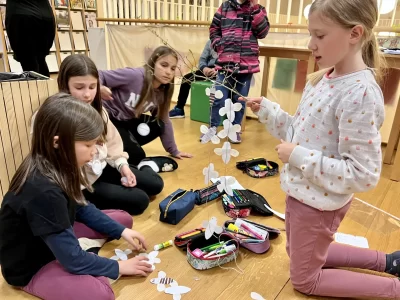
We have introduced younger readers to local heritage through four books: Jurij Jonke’s Beekeeping Inventions (Čebelarske domislice Jurija Jonkeja), The Dormouse Man: A Tale from the Kočevje Forests (Polšji možic: zgodba iz kočevskih gozdov), Mikul’s Devil: Mischief from Kostel (Mikulov vrag: vragolije iz Kostela) and How Vilko the Little Wolf Became the Hero Vilko Klepec (Kako je volkec Vilko postal junak Vilko Klepec). These books weave local storytelling traditions into contemporary tales and introduce readers to the natural world. In collaboration with Pavelhaus and the University of Graz, The Dormouse Man also appeared in German language as Das Pilichmandl. The books are accompanied by creative workshops and activities for children.
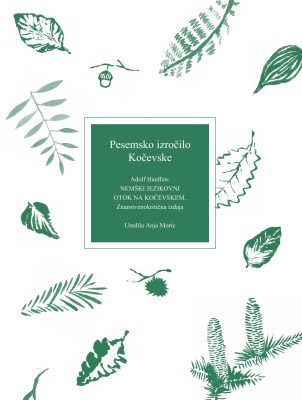
Another significant publishing achievement is The Folksong Tradition of the Gottschee Region (Pesemsko izročilo Kočevske), published in 2024 in collaboration with the Institute of Ethnomusicology at ZRC SAZU. Almost 130 years after the publication of Hauffen’s collection, this translation and its accompanying scholarly studies made Gottscheer song heritage accessible in Slovenian.
The Kočevje Region Reaches Beyond National Borders
Through personal accounts, the ethnographic film Deep in Our Hearts We Feel It (Globoko v srcu jo čutimo) portrays the lives of Gottscheers in Slovenia, Austria, the United States and Canada. It focuses on their memories, community associations and ties to their former homeland. Two years in the making, the film has also provided a starting point for discussions at screenings.
Through the EU co-funded projects Life in the Embrace of Forests (Življenje v objemu gozdov) and Heroes of Mysterious Forests (Junaki skrivnostnih gozdov), we developed new ways of presenting heritage. Their results include above presented children’s books, the Gottscheer blog heritage blog and an opportunity to explore life in the Kočevje region before the Second World War through virtual reality.
From Research to Restoration
In 2022, in collaboration with Stara Cerkev Parish, we saved the historic pig-feed kitchen (svinjska kuhinja) from deterioration and created a small ethnological collection about pig farming and spirit distillation inside it. In 2024, the cast-iron cross commemorating the priest Martin Rankl in Stara Cerkev was also restored.
We continue to restore Gottscheer gravestones in Stari Log and work towards preserving the Church of the Three Wise Men in Črni Potok. Both are long-term undertakings that depend on specialist collaboration, persistence and community support.

Behind every project are people: storytellers, artists, researchers, translators, teachers, conservators, visitors and supporters. Thank you to everyone who has entrusted us with their stories, knowledge, time and resources during our first decade.
We enter our second decade with new ideas and a commitment to continue caring for the heritage of the Kočevje region and creating opportunities for people connected to this place to come together.

You May Also Like

The Pillichmandle: presentation of the German edition at the Slovenska čitalnica (Slovenian Reading Room) in Graz

Mnenje Lele Angele Mršek Bajda (Lele B. Njatin) o naših otroških knjigah


